Traditions
What is cupping therapy? The marks, claims and evidence
Those round purple marks made cupping famous. NCCIH's fact sheet lists no proven uses and 5 documented side effects. At our Gainesville studio, cupping is a $30 add-on to a massage.
The short answer
What is cupping therapy, and does it work? Suction from a cup pulls skin up and draws blood toward the surface, leaving round marks. Dry cupping keeps skin intact; wet cupping pierces it. NCCIH lists no proven uses and 5 side effects. Our Gainesville studio offers it as a $30 add-on, for example to a 60 minute massage.
- dry cupping keeps skin intact; wet cupping pierces it
- 2 forms
- cups come in glass, ceramic, bamboo or plastic
- 4 materials
- listed as proven on NCCIH's cupping fact sheet
- 0 conditions
- cited on that fact sheet as showing it works
- 0 trials
- discoloration, scars, burns, infections, eczema or psoriasis flares
- 5 side effects
- rare: bleeding inside the skull; anemia from blood loss
- 2 severe events
What is cupping therapy, and how does the suction work?
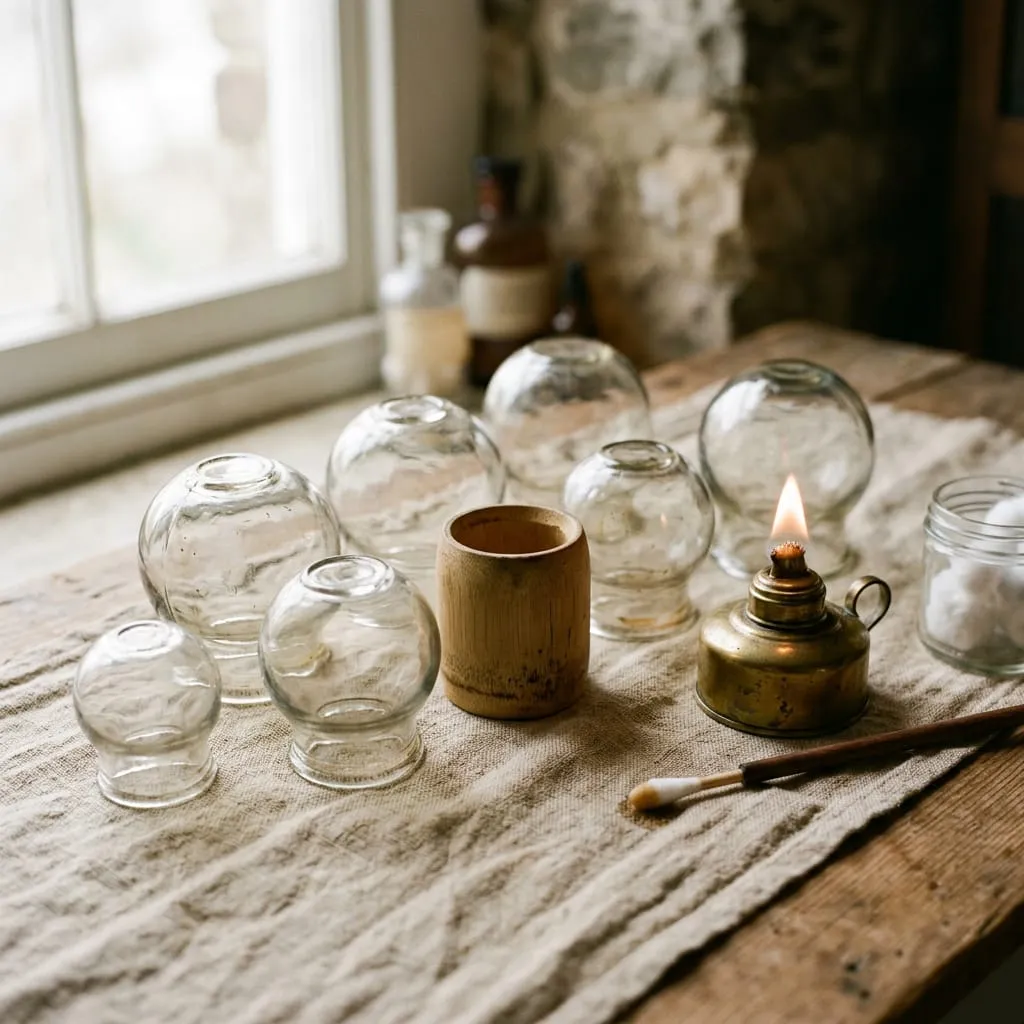
Cupping is a practice used in traditional medicine in several parts of the world, including China and the Middle East, according to the National Center for Complementary and Integrative Health (NCCIH). A practitioner sets a cup of glass, ceramic, bamboo or plastic on your skin and creates suction inside it, in 1 of 2 ways. The older method heats the cup with a flame to remove oxygen, then presses it to the skin; as the air inside cools, it pulls skin and surface tissue up into the cup. The newer method skips the fire and attaches a suction pump once the cup is in place.
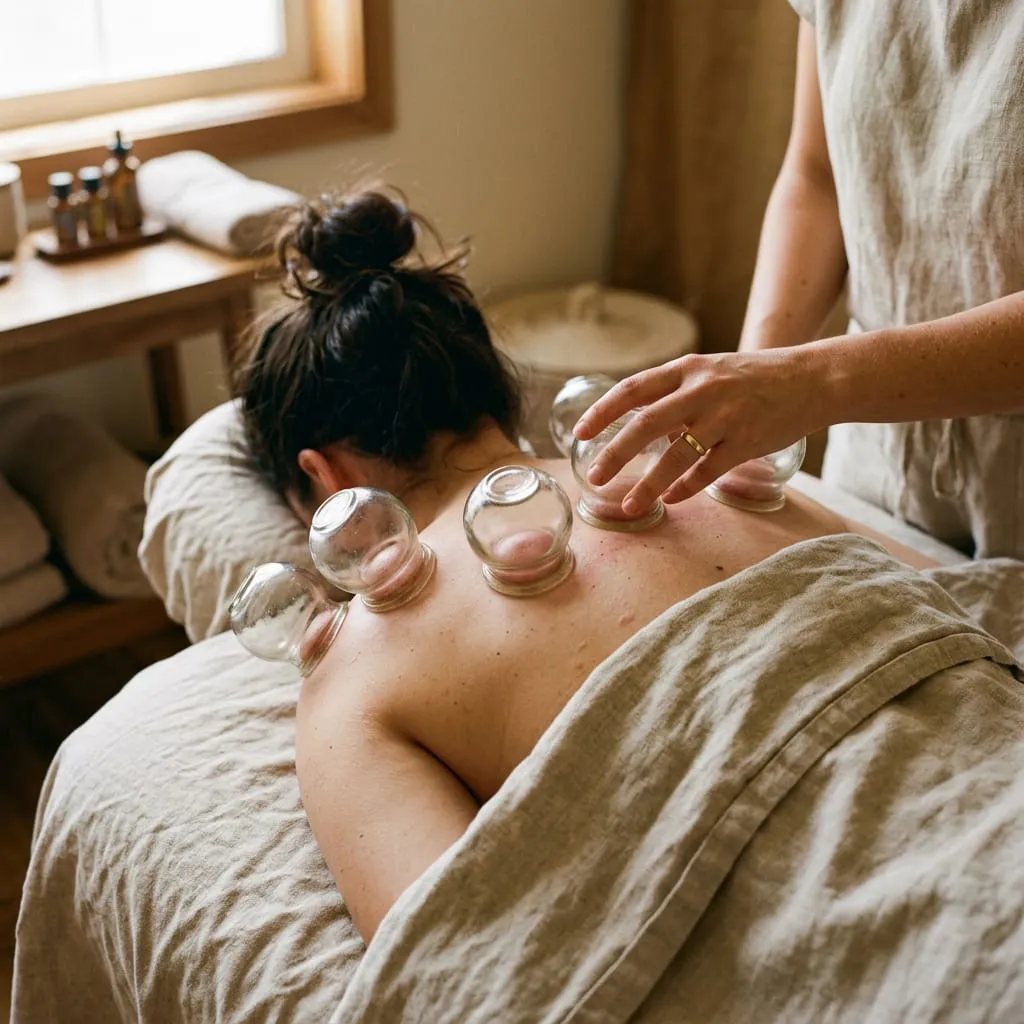
A massage therapist presses down into muscle, while cupping pulls skin and tissue up and away from it. That pull draws blood toward the surface, and the pooled blood under the skin is what you see afterwards as round marks.
What is the difference between dry and wet cupping?
The difference is whether the skin is broken. NCCIH draws the line plainly: in wet cupping, the skin is pierced and blood flows into the cup; dry cupping does not involve piercing the skin.
That changes the risk. Dry cupping leaves a mark like a bruise. Wet cupping opens the skin and draws blood on purpose, so the concern moves from discoloration to an open wound. If a practitioner can't tell you plainly which form they use, ask before anything else happens.
Why does cupping leave round marks?
Suction inside the cup breaks tiny blood vessels just under the skin, and blood leaks into the tissue around them. The result is a flat, round patch of red, purple or nearly black discoloration that follows the rim of the cup. The marks come from negative pressure rather than a blow, and they are not toxins being drawn out of the body, whatever a brochure says.
Should you tell your doctor about cupping marks?
Yes. NCCIH advises explaining the marks to your health care providers so they aren't mistaken for signs of physical abuse. A clinician who sees symmetrical round marks on a back with no context has reason to ask questions, and mentioning the cupping first saves everyone the detour.
Does cupping therapy work?
Nobody has shown it either way. NCCIH's cupping fact sheet lists no conditions the practice treats and cites no trials showing it works; almost all of it covers how cupping is done and what can go wrong.
Acupuncture, from the same tradition, has had far more study, and NCCIH's page on traditional Chinese medicine reports results in both directions. Some trials find real and sham acupuncture equally effective, which points to a placebo effect. Other studies suggest real acupuncture may help several kinds of often-chronic pain and headache. Our guide to complementary approaches to chronic pain covers that evidence in detail.
NCCIH also names 2 effects acupuncture studies point to: it stimulates the release of the body's natural painkillers, and it affects brain areas involved in processing pain. That is a testable mechanism with research behind it. The fact sheet offers no comparable finding for the idea that cupping helps by drawing blood to the surface.
So the fair reading is that the evidence needed to say cupping works, or that it doesn't, is largely missing. The relief people feel after a session may owe a good deal to expectation, attention and the comfort of lying still while someone works on your back.
NCCIH's cupping fact sheet lists no conditions the practice treats and cites no trials showing it works.
| Finding NCCIH reports | Matching study on its reference list | Year |
|---|---|---|
| Acupuncture may ease often-chronic pain such as low-back and neck pain | Vickers et al., individual patient data meta-analysis, Archives of Internal Medicine | 2012 |
| Acupuncture may ease osteoarthritis and knee pain | Manheimer et al., Cochrane review of peripheral joint osteoarthritis | 2010 |
| Acupuncture may help carpal tunnel syndrome | Maeda et al., on rewiring of the sensory cortex, Brain | 2017 |
| Acupuncture may reduce how often tension headaches happen | Linde et al., Cochrane review of tension-type headache | 2009 |
| Acupuncture may help prevent migraines | Linde et al., Cochrane review of migraine prevention | 2009 |
| Cupping: no condition listed | None. The cupping fact sheet, last updated November 2018, lists no references; the TCM page lists 21 | — |
Is cupping safe?
Cupping carries documented risks. NCCIH lists 5 side effects: persistent skin discoloration, scars, burns, infections, and flares of eczema or psoriasis. Burns trace back to the fire method, where an open flame is used close to the skin. Lasting discoloration and scarring are on the list too, so the marks are not always harmless and brief.
NCCIH also flags 2 rare but severe events. Bleeding inside the skull has been reported after cupping on the scalp, and anemia from blood loss after repeated wet cupping. Both are uncommon, and both are tied to the more aggressive forms of the practice.
Infection risk comes from the equipment. Cups can pick up blood, on purpose in wet cupping and by accident in dry cupping, and NCCIH warns that using the same equipment on more than one person without sterilizing it between clients can spread bloodborne diseases, naming hepatitis B and C.
Doesn't a long history prove cupping works?
No. Cupping usually comes wrapped in traditional Chinese medicine, which NCCIH describes as a system that has evolved over thousands of years and uses approaches such as acupuncture and tai chi, along with herbal products, to address health problems. Long use shows that a practice has lasted. Practices from this one tradition have fared very differently under modern testing, which is the clearest sign that age settles nothing on its own.
Tai chi does reasonably well: NCCIH points to research suggesting it may improve balance and stability in older people and those with Parkinson's disease, reduce pain from knee osteoarthritis, and help people cope with fibromyalgia and back pain. Acupuncture sits in the mixed middle described above. Chinese herbal products have been studied for 4 problem areas (stroke, heart disease, mental disorders, and respiratory illnesses such as bronchitis and the common cold), but because many studies have been of poor quality, no firm conclusions can be made. Cupping has no proven uses listed at all.
Tradition is no guarantee of safety either. NCCIH reports Chinese herbal products found to contain undeclared drugs such as the blood thinner warfarin, 3 heavy metals (arsenic, lead and cadmium), or the wrong herbs, some of which have caused organ damage. Our tui na and acupressure guide covers those products in more depth.
Training matters as well. For acupuncture, NCCIH says complications have come from nonsterile needles and improper delivery, and names 4: infections, punctured organs, collapsed lungs, and injury to the central nervous system. Most U.S. states require acupuncturists to hold certification from the National Certification Commission for Acupuncture and Oriental Medicine. NCCIH names no equivalent credential for cupping, which leaves more of the checking to you.
| TCM practice | What NCCIH reports |
|---|---|
| Tai chi | May improve balance and stability in older people and those with Parkinson's disease, reduce knee-osteoarthritis pain, and help people cope with fibromyalgia and back pain. |
| Acupuncture | Mixed: may help several often-chronic pain conditions and headaches, but some trials find sham acupuncture works equally well. |
| Chinese herbal products | Studied for stroke, heart disease, mental disorders and respiratory illness, but studies are of poor quality, so no firm conclusions. |
| Cupping | No conditions listed as proven; the fact sheet is almost entirely method and safety. |
How can you try cupping in Gainesville?
At Wellness Massage Spa, cupping is a $30 add-on to a massage rather than a session of its own. To add it, call (352) 339-6646 or ask at the studio. The body massage menu covers Deep Tissue, Swedish, Relaxation, Sports and Reflexology, and a 60 minute session of any of them is $80. We are at 5750 SW 75th Ct Ste 20, Gainesville, FL 32608, open every day from 9:30 AM to 10 PM.
Before your first session, run through the checklist below with your therapist. If you take medication, are pregnant, have a skin condition, or bruise or bleed easily, check with your own clinician first. NCCIH's broader rule for traditional Chinese medicine applies here in full: don't let cupping replace or delay conventional care for a real condition.
- Ask dry or wet. Wet cupping breaks the skin and carries the heavier risks: bloodborne infection, scarring and, with repetition, blood loss.
- Ask about the cups. Single-use, or sterilized between clients? That answer protects you in dry cupping as much as wet.
- Check your skin. If you have eczema or psoriasis, cupping may set off a flare.
- Keep cups off the scalp. Bleeding inside the skull after scalp cupping is rare but on the record.
- Expect the marks afterwards. Mention them to any clinician who sees them so they aren't misread.
Questions people ask
What is cupping therapy?
Cupping places a glass, ceramic, bamboo or plastic cup on the skin and creates suction inside it, either by briefly heating the cup with a flame or by attaching a pump. The suction pulls skin and surface tissue upward and draws blood toward the surface. It is used in traditional medicine in several parts of the world, including China and the Middle East.
Why does cupping leave round marks?
Suction breaks tiny blood vessels just under the skin, and blood leaks into the surrounding tissue, much as it does in a bruise. The marks are temporary, and NCCIH advises explaining them to your health care providers so they aren't mistaken for signs of physical abuse.
Does cupping therapy work?
The high-quality trials needed to answer that are largely missing. NCCIH's cupping fact sheet lists no conditions the practice treats and cites no trials showing it works. Relief after a session may owe a good deal to expectation, attention and the comfort of the treatment itself.
What's the difference between dry and wet cupping?
Dry cupping keeps the skin intact and leaves a bruise-like mark. In wet cupping the practitioner pierces the skin and blood flows into the cup, which brings heavier risks: bloodborne infection, scarring and, with repeated sessions, anemia from blood loss. Ask which form a practitioner uses before you start.
Is cupping safe?
It carries documented risks: persistent skin discoloration, scars, burns, infections, and flares of eczema or psoriasis. Rare but serious events include bleeding inside the skull after scalp cupping and anemia after repeated wet cupping. The key protection is cups that are single-use or sterilized between clients, since contaminated equipment can spread hepatitis B and C.
How much does cupping cost at Wellness Massage Spa in Gainesville?
Cupping is a $30 add-on to a massage at our studio at 5750 SW 75th Ct Ste 20, Gainesville, FL 32608. It is not sold as a session on its own. Call (352) 339-6646 to add it, or ask at the studio.
Sources
Written by Wellness Massage Spa from the primary sources above. Sessions at our Gainesville studio are performed by licensed massage therapists; Florida licenses every therapist through the Florida Board of Massage Therapy.
This guide is for general education only and is not medical advice. Talk with your healthcare provider about what is right for you.
Cupping add-on
Want to try cupping in Gainesville?
Cupping is added to your massage for $30. Tell your therapist if it's your first time, and ask about the cups before they begin.
Wellness Massage Spa · 5750 SW 75th Ct Ste 20, Gainesville, FL 32608 · (352) 339-6646 · Open daily 9:30 AM – 10 PM.
Keep reading
Tui na, acupressure and TCM bodywork
The hands-on side of Chinese medicine, checked against the same evidence.
Read
Does massage help back pain?
What the research supports when your lower back is the problem.
Read
Deep Tissue Massage
Pressure into the deeper layers of muscle. Ask to add cupping.
Read